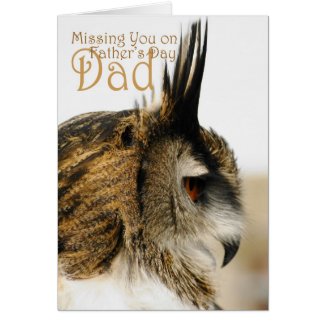
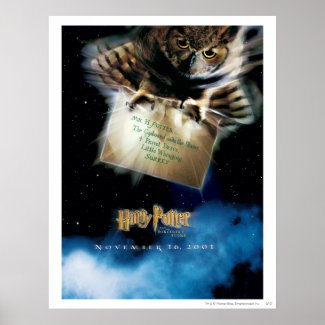
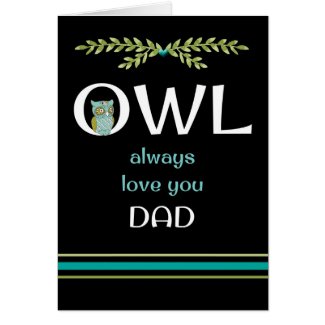
We know owls make great dads, and we also know that many great human dads are owl lovers. So, this Father's Day, give dad an unique owl gift that he will sure hoot about.
No question about it, owls are one of the most fascinating creatures on the planet. We have learned a lot about their mysterious ways. Yet, it seems there is more to learn. For now, though, lets review 10 of the most fascinating facts about them:
1. All owls can rotate their heads 270 degrees in any direction. (Not 360 degrees as was commonly believed).
2. Owl are silent flyers, allowing them to sneak up on their prey.
3. Owls eyes are tubular and fixed. They must turn their heads to see in different directions.
4. They are able to to make meals out of prey that are bigger than them, such as a fawn.
5. The large Fish Owls actually do prey on fish, mostly salmon. 6. Owls can swallow many of their prey whole. They then later regurgitate what is called 'pellets' which are the indigestible parts, such as fur and bones. 7. Burrowing Owls nest in the ground and place dung around their entrance to entice their favorite snacks, dung beetles. 8. Owls can be found anywhere in the world, except the Antarctica. 9. Owls can make some of the scariest noises in the animal kingdom. Some of their calls seem to come straight out of a horror film. Listen to some examples here.
10. The owls flattened face allows sounds to funnel to their ears; emphasizing their hearing ability about 10 times.
There are over 200 species of owls in the world, and in this blog we have covered most of the popular and well known ones. But, there are some that many are unfamiliar with, or are even aware they exist. One of these are the Fishing Owls. Yes, they are called that as they do primarily hunt fish, especially, salmon, as well as other land prey. Being that fish is their main diet, they inhabit areas with rivers with year round slow currents. They capture their fish prey by perching on low tree limbs or rocks over shallow water and pounce on the prey as it goes by. They have also been known to catch while sailing over water. Interesting enough, they are the largest owl in the world and ranked as the fifth heaviest. Maybe the reason they are not as well known is because of where they live. Fishing owls are found in remote areas of Russia, Japan and China. In addition to running rivers, the Fishing Owls need mature forest that can provide plenty of tree cavities for nesting. They are nocturnal birds, but can sometimes be seen during the day. They are said to have a very interesting call that is described as 'duet'. Listen to the Blakiston's fish owl here. The mating and breeding habits of Fishing owls are much like those of the other species. They usually become a couple at around age 2 and breed by age 3, with only one or two eggs laid. However, if two are laid, only one chick commonly survives. Sadly, like so many other owl species, the Fishing owls are endangered.
Ever wonder how long owls live? The answer depends on the species and circumstance. There are over 200 species of owls in the world and they all have different lifespans. In the wild, a long-lived owl can, in general, live up to 20 years; whereas, a short-lived owl may live only a year. In captivity, though, owls live twice as long as their wild counterparts.
The longest lived owl is the Great Horned Owl that, in the wild, can live up to 20 - 25 years. In captivity, this bird can reach 30 years. One captive Great Horned owl lived up to the ripe old age of 34. Another long lived owl is the Snowy Owl. This species, in general, live 10-15 years in the wild, and about 20, or a little more, in captivity. Screech Owls live, on average in the wild, 10 years. In captivity, they can have up to 20 birthdays. The shortest lived owl is the Barn Owl. their average lifespan is 4 years. In captivity, Barn Owls can have 10 -15 birthdays. Overall, if an owl survives through its fledgling stage, every birthday is a true cause for celebration. ...And with the current popularity of owls in the human world, owl themed birthday celebrations are all the rage, especially with kids.
When we think of the new year, we also think of the Chinese New Year and the astrological animal for that year. No, Chinese astrology do not include an owl, however, the owl is included in two other cultures: the Native American Totem Animal and India's Pancha Pakshi Shastra. In the Native American culture, it is believed that your astrological or totem animal chooses you at birth base on the character traits you will need to acquire or strengthen throughout your life.
The owl is your totem animal if your birth date falls between November 23 and December 21. People with the owl totem are said to be easy going and adventure seeking. However, this also means they can be reckless and somewhat thoughtless at times, which can place them in rather sticky situations. Still, the owl person is a great listener and can be enthusiastic. They are very adaptable and can do well in any occupation, but they excel as artists and teachers.
The owl serves to remind you to veer away from greed and excesses.
The Pancha-Pakshi Sastra is the most popular astrology mythology in South India. Pancha means 5 and Pakshi means birds, thus, their astrology is represented by five birds, the owl being one of them. Unfortunately, in order to know your birth pakshi, you will need to know your birth star according to the Vedic Astrology and the Paksha of the moon at the time of your birth; not an easy task to do. Well, let's explore the owl Pakshi anyway. It actually sounds similar to the Native American totem owl.
Owl Pakshi people are said to be very ambitious with lots of confidence. They are energetic and sometimes need to calm down their enthusiasm. They also have short tempers that they need to learn to control. They are intelligent and make great students.
What I find fasinating is that I, personally, don't precieve recklessness and adventure seeking associated with owls, yet here we have two totally different cultures that do and are similiar in their intrepetations. What do you think? Let me know in the comment area below.